In its October 2010 issue Motor Trend magazine published an article on the all new Nissan Leaf entitled, “The Electric Future is Here”. A pretty bold statement to make if a person were to consider the track record that the United States has with electric vehicles. Over the past two decades there have been a myriad of electric Ford Rangers, service vans, and commuter cars, all for the most part banished to the southern regions of California as feeble attempts to save the Ozone layer. The most revolutionary of these Eco friendly attempts was the General Motors EV-1 from the mid 90’s; a sleek futuristic electric car that looked like a Saturn mixed with an Oldsmobile. The EV-1 had a range of over 100 miles on a single charge, had 137hp, and weighing under 3000 lbs could outrun a Nissan 300z to sixty miles an hour.
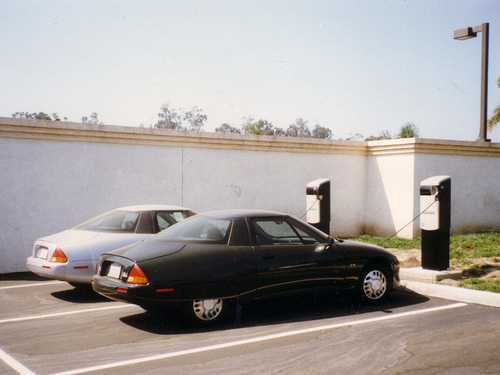
The EV-1 program, groundbreaking and effective as it was, mysteriously and quite controversially disappeared. After three years of production just over 1,100 EV-1’s were produced and none of them were sold to consumers; EV-1’s were leased only and none of the lessees were given the option to buy. Amidst whisperings of government and big oil conspiracy the EV-1 program was shut down and shamefully all the EV-1 cars, with a few exceptions, were crushed and recycled. While many argue that the EV-1 was incredibly expensive for GM to build, demand was not high enough, and the battery technology for the day was not yet efficient enough many still believe that there was something more to the failure of the EV-1; there was even a documentary made for television entitled “Who Killed the Electric Car?”.
Now more than a decade later Nissan has created the Leaf, a car that is very similar to the EV-1 in range, performance, and function. With ten more years of technology on it’s side however the Leaf is much more car like than the EV-1 was. While the EV-1 could seat only two the Leaf can seat five, just like any other sedan that you would seat on the road. The Leaf can travel over 100 miles on a single charge, sprint to 60MPH in a modest 11.5 seconds, and Nissan will install a home charging system that brings a hefty $2,000 tax credit with it. The price tag for a Leaf is also very car like at $33,560, considerably more than your average compact car. That price difference however is said to recoup itself after three years since buying gas will not be an issue.
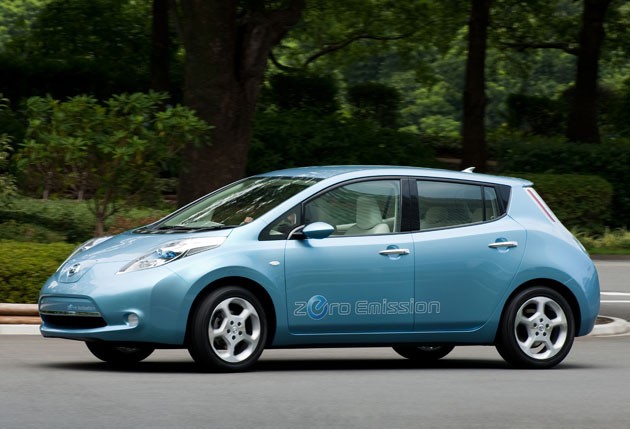
Electric cars have come and gone, mostly gone, as the struggle to find alternatives to the internal combustion engine continues. While electric vehicles are still in their preliminary stages and are limited in their range of travel the new Nissan Leaf will hopefully give us a glimpse as to how effective they can be. Fuel will still be needed for extended periods of travel but the majority of travel done by the average American is surely under 100 miles in one day. The Nissan Leaf goes on sale in the U.S. in December of this year, it’s already made it farther and generated more demand than the Ev-1 did so maybe it will be the trendsetter for our electric future.




 Main Street Rides
Leave a comment